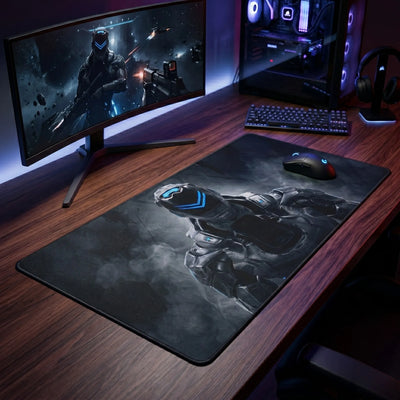
You bought the latest competitive mouse on the market, the glide felt weightless for the first few weeks, and then suddenly it starts to scrape and drag. The culprit? Worn skates. At PopMyPad, we'll walk you through why your skates degrade and how a technical ergonomic desk mouse pad can save your investment.
What is PTFE (Teflon)?
Underneath your mouse sit small white or black feet, usually made of PTFE (polytetrafluoroethylene). It's the solid material with the lowest coefficient of friction in the world, and it's what makes your mouse feel like it's floating. But it's also a relatively soft material.
A bare desk: invisible sandpaper
Playing directly on wood, glass or laminate is a disaster for PTFE. Desks are covered in micro-dust, crumbs and hard irregularities. With every fast movement, your desk acts like fine-grit sandpaper. Within a few months your skates are scratched and flattened, friction climbs significantly, and your muscle memory falls apart.
How high-density cloth protects your gear
Using a mouse pad with a micro-woven cloth surface gives you:
- Cushioning: the cloth absorbs the pressure from your hand, keeping the mouse's hard plastic from grinding against the surface.
- Filtration: the fibers trap micro-dust below the tracking surface (as long as you clean your pad regularly).
- Gentle friction: PTFE glides across cloth without eroding, multiplying its lifespan by three or four.
Don't replace your mouse every year. Just get the right surface under it and preserve that out-of-the-box glide that makes a real difference in game.